

love is a hook.
ephemera #12: following a medieval thread from John Fowles’s “The Collector” to Andreas Capellanus’s “De Amore”.🥀

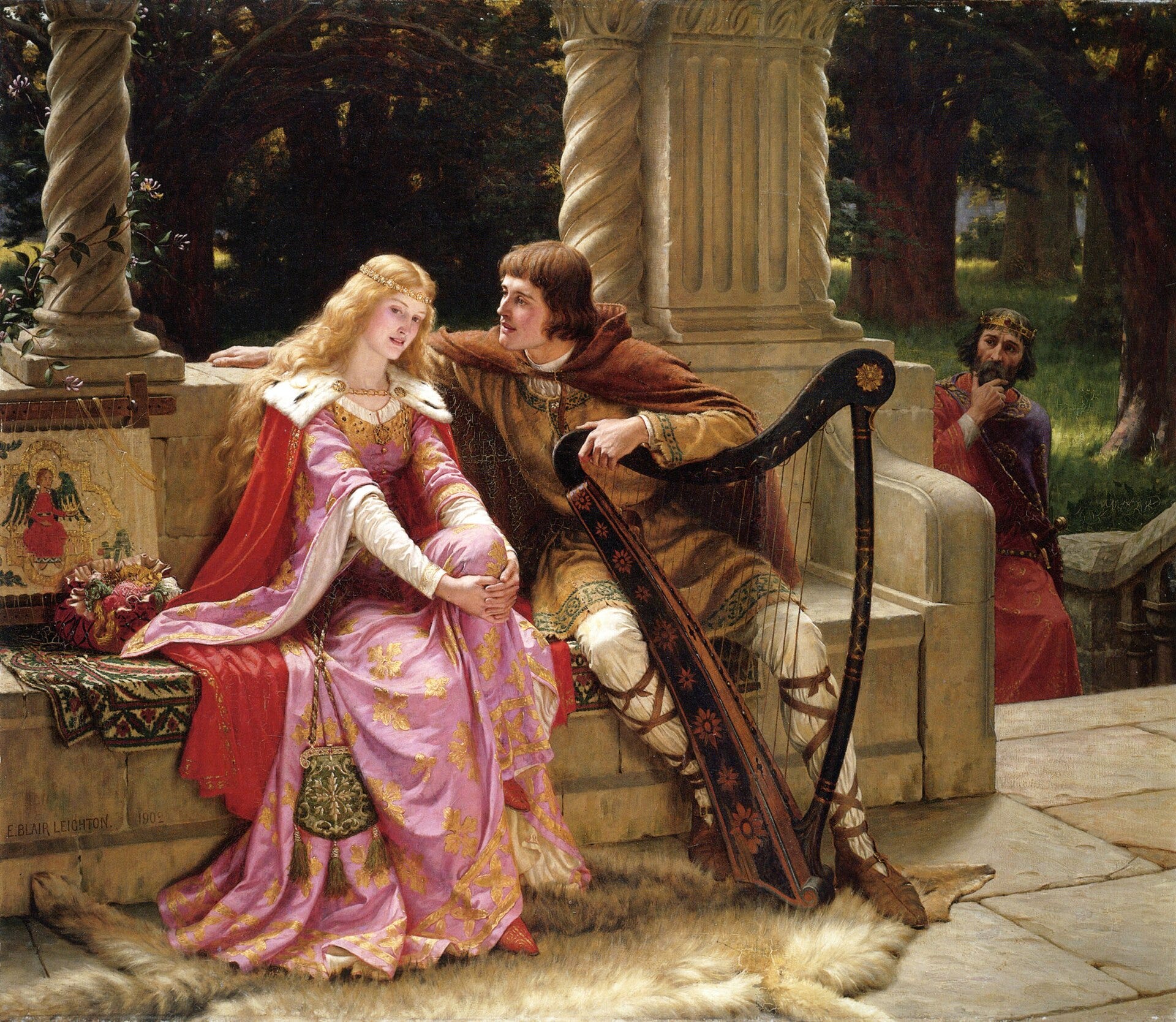
Fresh back from Milan, I started reading John Fowles’ The Collector. It’s a book I’ve had on my TBR for a while, one that’s always intrigued me. The moment I saw it on the shelves of the American Bookstore, I absolutely had to pick it up. The first thing I noticed was a French sentence in the preface, which immediately caught my attention and prompted me to do some research.
And...it was my undoing! A whole world opened up before me. It was like crossing a portal that took me back to the origins of what has always fascinated me: the Middle Ages and their harmonious contradictions.
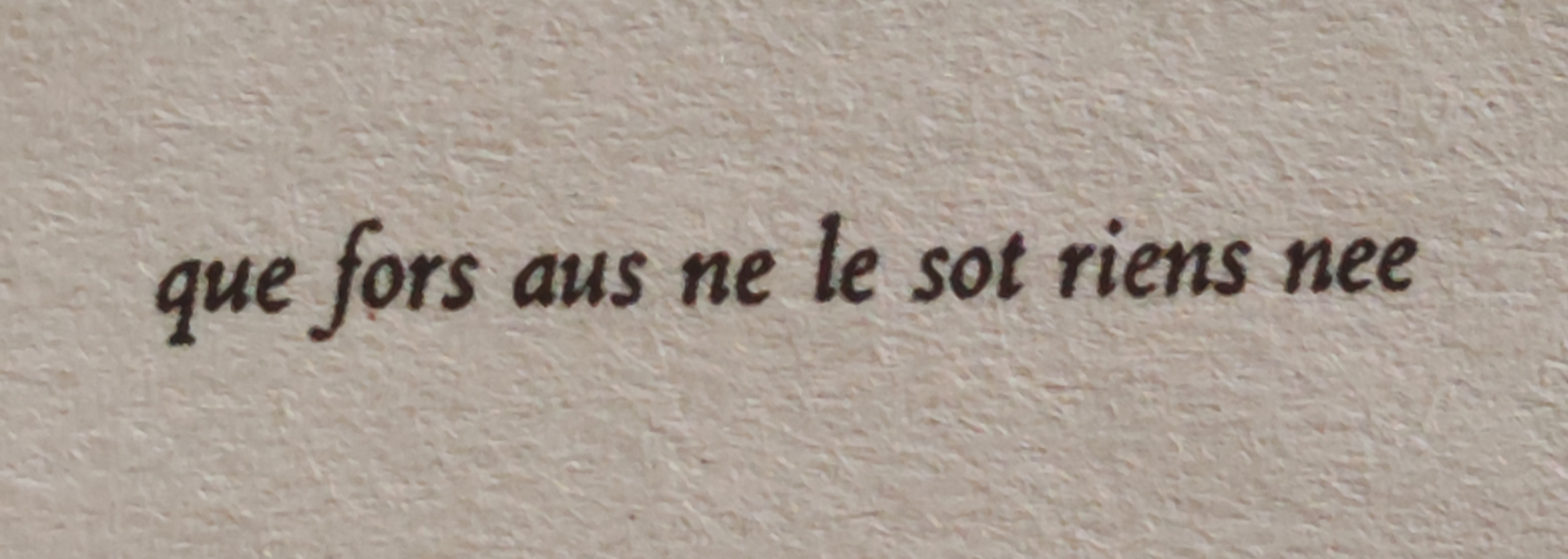
The quote in question is taken from the ancient poem La Châtelaine de Vergy, an anonymous short 13th-century romance of courtly love in Old French, and it is: “que fors aus ne le sot riens nee“.
It roughly translates to “no one born knew of it except them” or “not a soul knew of it but themselves”.
This story tells of a love so secret that even their union is mediated by silence: a knight and a lady can only meet when a small, trained dog is sent as a signal. It is the very essence of courtly love: secrecy as a necessary condition for the feeling to exist. And yet, the moment the secret is betrayed, tragedy becomes inevitable, leading to the death of both. As the poem itself recites:
“And thus it comes to pass that he who has made known the secret, loses all delight, since the greater the love between true lovers, the more grieved are they when either thinks that that which should have been kept secret, has been made known by the other.”
Digging through the lines of this fatal secret, I stumbled upon an author I already knew, but whose name I hadn’t heard in years. He resurfaced like a ghost from my first phase of fascination with the Middle Ages and courtly love: Andreas Capellanus and his De Amore.
Despite its interpretive ambiguity, the De Amore (circa 1184) was read for centuries as the ultimate authority on love. It significantly contributed to defining a cultural sensitivity regarding Eros for all men of culture, especially the love poets of Western European lyric poetry.
In Chapter I, Capellanus defines love as a “passio quaedam innata“, a suffering:
“Love is a certain inborn suffering derived from the sight of and excessive meditation upon the beauty of the opposite sex, which causes each one to wish above all things the embraces of the other...”
The fact that love is a passio (from the root pati, “to suffer”) reflects a condition of perennial anguish. Capellanus highlights how no stage of love is free from fears: before love is returned, the lover fears he has exerted himself in vain; but even when love is reciprocated, the torment increases:
“...for each of the lovers fears that what he has acquired with so much effort may be lost through the effort of someone else [...] He fears, too, that he may offend his loved one in some way; indeed he fears so many things that it would be difficult to tell them.”
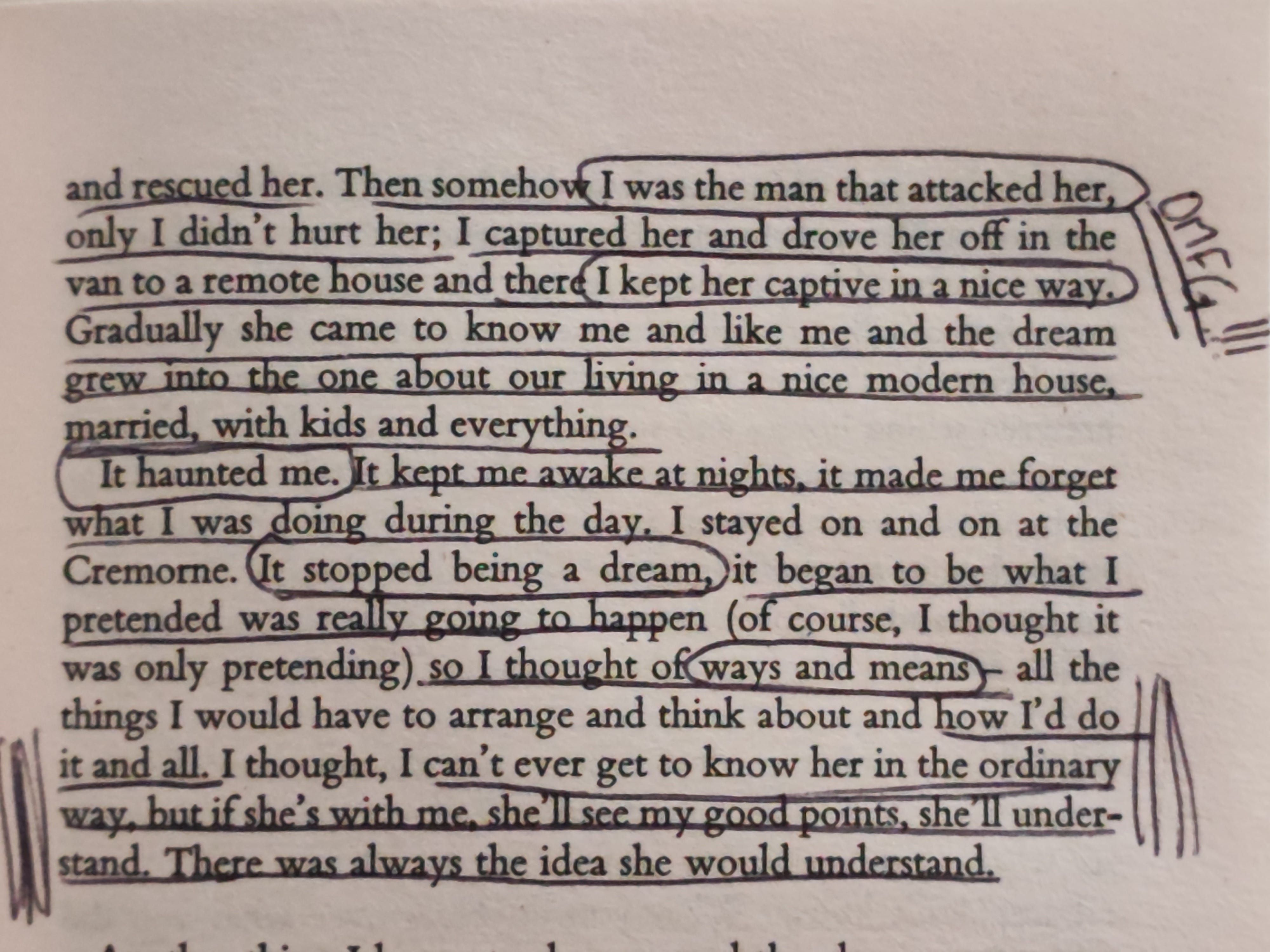
The most sinister aspect, which is perfectly reflected in Fowles’s novel, lies in Chapter III, where Capellanus explains the etymology of the term: Love gets its name from amus, meaning “hook”.
“Love gets its name (amor) from the word for hook (amus), which means ‘to capture’ or ‘to be captured,’ for he who is in love is captured in the chains of desire and wishes to capture someone else with his hook.”
Here, the circle closes with a tragic irony. In the Middle Ages, secrecy was the ultimate exaltation of pure love, a sanctuary to protect oneself from the lausengiers (the backbiters), those envious whisperers who lived to destroy the intimacy of others. In The Collector, however, Fowles transforms this sanctuary into a prison. Capellanus’s hook stops being a poetic metaphor and becomes the instrument of a real and ruthless capture.
For those who wish to measure the temperature of their own desire, Capellanus drew up the 12 Rules of Love, a code that oscillates between nobility and obsession:
Thou shalt avoid avarice like the deadly pestilence and shalt embrace its opposite.
Thou shalt keep thyself chaste for the sake of her whom thou lovest.
Thou shalt not knowingly strive to break up a correct love affair that someone else is engaged in.
Thou shalt not choose for thy love anyone whom a natural sense of shame forbids thee to marry.
Be mindful completely to avoid falsehood.
Thou shalt not have many who know of thy love affair.
Being obedient in all things to the commands of ladies, thou shalt ever strive to ally thyself to the service of Love.
In giving and receiving love’s solaces let modesty be ever present.
Thou shalt speak no evil.
Thou shalt not be a revealer of love affairs.
Thou shalt be in all things polite and courteous.
In practicing the solaces of love thou shalt not exceed the desires of thy lover.
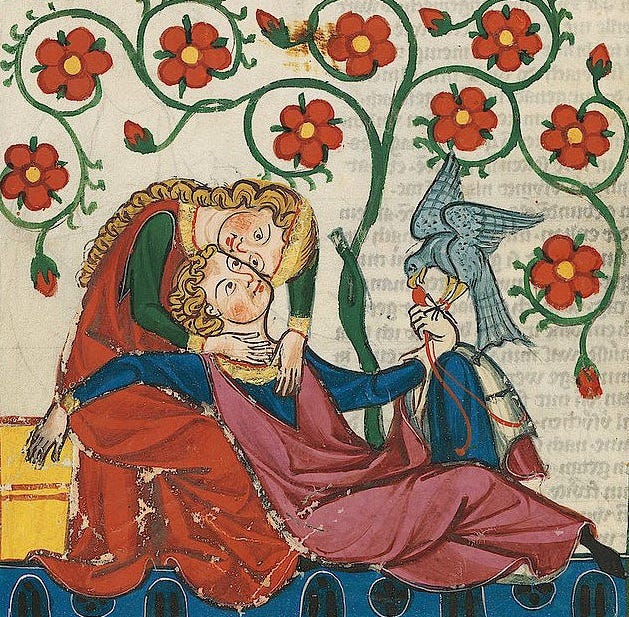
I cannot help but side with Capellanus. To me, the medieval vision is not a sinister shadow, but a vital necessity. In a world that wants everything exposed and consumed, secrecy is the ultimate form of resistance. It is that “sanctuary” where Eros can breathe without being suffocated by the murmur of the world.
I do not interpret that verse, “que fors aus ne le sot riens nee” as a condemnation, but rather as the supreme privilege of those who possess a world of their own and who are committed to protecting it at all costs, so that “no other born can inhabit it.”
Perhaps love truly must be a “hook”: an invisible bond that captures you and holds you tight, not to strip you of your freedom, but to offer you a profound grounding.
We all hold a “secret that no one else born knows.” But one question remains: do we guard this secret in the shadows because it is the only way to protect its sacredness, or have we chosen to pierce that beauty with a hook simply out of fear of its change, for the illusion of finally possessing it outside of time?
Food for thought…
Further Reading:
Capellanus, Andreas. The Art of Courtly Love (De Amore, c. 1184). Translated by John Jay Parry. (available for free)
La Châtelaine de Vergy. Anonymous, 13th Century. (available for free)
Fowles, John. The Collector.
Wikipedia: De Amore (Andreas Capellanus) and Châtelaine de Vergy.
I’ll be talking about the Middle Ages often...so stay tuned!
See you tomorrow for the next Ephemera.
Nicole.
🥀
Previously on LITERARIA:
bones, books, and bitter beauty.

I returned from Milan with my mind full and my body taking its toll. I bear the physical signs of days spent walking and walking to see as much as possible in the few days I had. So my feet are begging for mercy. And even a slight backache...yay!
what do Barthes, Le Goff, and Carson have in common?

In these hours when the weather shows no signs of hope (yes, even today is gloomy and cold), I realize that its stubborn desire to return to the lost winter days perfectly coincides with my miserable condition: being unable to remain anchored to a single story. My mind moves amidst interference, wandering from page to page, searching for an invisible thread that ties together even the most disparate narratives.
eros & thanatos reading list.

Following my recent discoveries…like Bataille and the book I mentioned yesterday…I realized I’ve been circling this particular theme for quite some time. I felt the need to start digging and find both fiction and non-fiction titles that could fill the gaps in my knowledge of this deeply unsettling subject. There are so many holes to plug; I didn’t want to keep “leaking” information from every side, so to speak. So, I decided to create this map for myself, and for anyone else interested in exploring this world.